
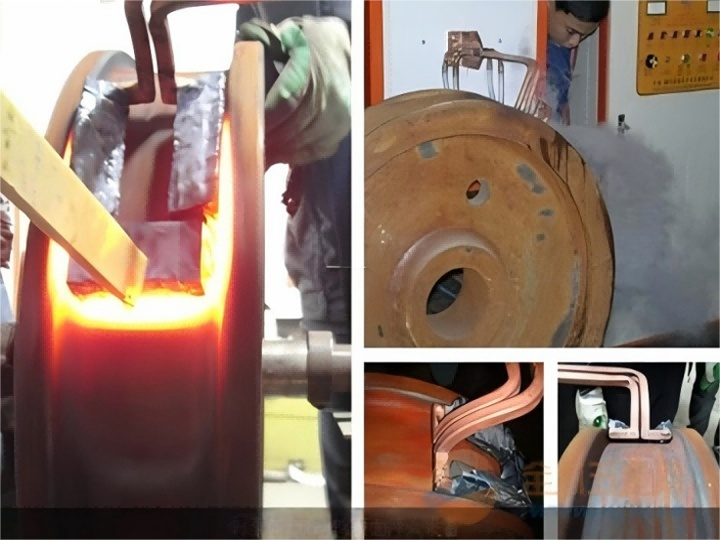
quenching process of crane wheel
What Kind of Quenching Process Is Used for Crane Wheel Forging
The length of quenching time is one of the important factors affecting the mechanical properties and dynamic load strength of crane wheel forgings. In order to make the wheel have high mechanical properties, the quenching depth must be very large when surface quenching is performed. At the same time, considering that a large amount of heat is accumulated in the wheel for subsequent self-tempering, the quenching process must be specified according to the necessary conditions during general heating quenching: a deeper quenching layer; creating good self-tempering conditions
The quenching process of crane wheel forgings is very important. Wheel quenching can be overall quenching or rim surface quenching, the latter of which is more widely used. When using rolling residual heat quenching, it is generally only surface quenching. When using separate heating for rim surface quenching, fine-grained structure is obtained as a result of recrystallization, which helps to improve the mechanical properties of the spoke and rim.
The typical heat treatment method is: separate heating heat treatment – tread water quenching – self-tempering in the pit. The quenching is mainly to spray water on the wheel tread and the outer rim surface to increase the hardness of the rim and reduce the hardness difference, thereby improving the performance of the spoke. After tempering, the semi-finished wheel is made.
When quenching with residual heat from rolling, the quenching time of the crane wheel is longer, and the accumulated heat in the wheel is lost more, thus reducing the self-tempering temperature. If the quenching time is shortened, the self-tempering temperature will increase, but there will be a risk of insufficient strength limit. Therefore, when heat treatment is carried out with residual heat from rolling, the relationship between the various heat treatment processes makes the selection of heat treatment system very complicated in the entire wheel production process. When the wheel is quenched by separate heating, it is easier to control the wheel temperature, and then when self-tempering, it is also easy to determine the self-tempering process that ensures the stability of the wheel mechanical properties.
In general, crane wheel quenching requires a combination of material selection, process control, hardness standards and subsequent quality testing to ensure that the wheels have sufficient hardness, wear resistance and fatigue resistance under high-load working environments.
Glory Rail offers all types of Crane Wheels for sale. This includes bridge crane wheels and overhead crane wheels. Also provide container crane, sts crane wheel sales. At the same time, we also supply wheels for carrying equipment in shipyards, steel mills, and kilns.
We have high-quality wheel producers. Can produce forged wheels, cast wheels as well as machined wheels. The material is made of high-quality special steel to ensure longer service life and better stability.


