
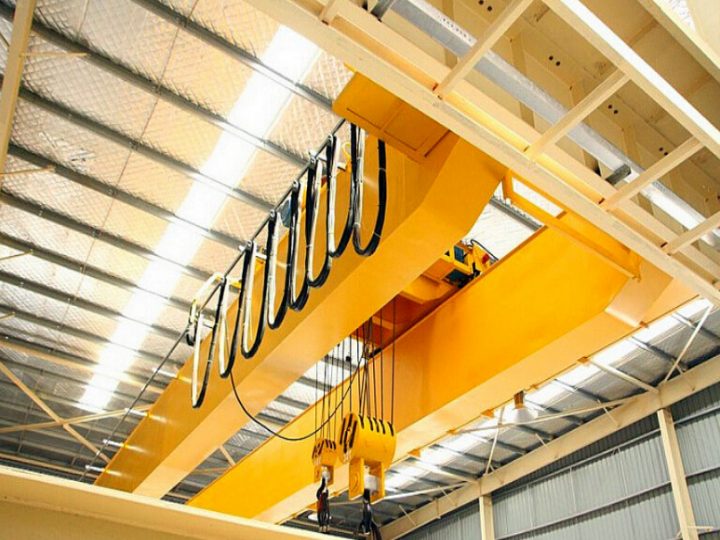
crane hook maintenance
Crane Hook Maintenance And Anti-Wear Methods
The hook is one of the main parts of lifting machinery. Its material, manufacturing process, factory inspection quality and self-inspection level are directly related to the safety issues during use. If it is not done properly, special equipment accidents may occur, causing personal and property losses. Therefore, the material, inspection and scrap standards of the hook must be strictly controlled.
Types of hooks
1. According to the difference in manufacturing methods, hooks can be divided into forged hooks and plate hooks.
(1) Forged hooks are generally made of #20 high-quality carbon steel, which is forged, stamped, annealed, and then machined. Forged hooks can be made into single hooks and double hooks.
(2) Plate hook is generally used for lifting large weight lifting machinery. The plate hook is made of a 30mm thick formed plate overlapping pin. The plate hook is equipped with a protection plate, which is generally made of steel rolled with Q235A, Q235B or 16mn steel. Plate hook is also divided into single hook and double hook, single hook is mainly used for casting lifting machinery.
2. The cross-section of the hook is rectangular, trapezoidal, T-shaped, etc. Cranes usually use single or double hooks with trapezoidal cross-sections; rectangular cross-sections are generally plate hooks; electric hoists usually use T-section hooks. There is a certain relationship between the main dimensions of the hook, for example: between the opening S and the hook hole diameter D, S=0.75D.
Precautions for safe use of hooks
(1) Hooks should be produced by regular professional manufacturers in accordance with the technical conditions and safety specifications of hooks. The products should have the manufacturer’s quality certificate, otherwise they shall not be used. Qualified hooks bulk purchase, please visit GloryRail crane accessories parts– crane hook, we supplly all kind of hook customization, also sopport drawings. Have any requirements, welcome to contact us!
(2) New hooks should be subjected to load tests and can only be used after passing the test. The measured hook opening should not exceed 0.25% of the original opening.
(3) During use, the hooks should be checked frequently for cracks or serious deformation, corrosion and wear.
(4) The hooks should be tested once a year. During the test, a static test is carried out for 10 minutes at 1.25 times the allowable working load, and then a magnifying glass or other method is used to check for cracks, notches and residual deformation.
(5) Dangerous sections should be cleaned with kerosene and checked for cracks with a magnifying glass. Plate hooks should be checked for wear of bushings and pins.
(6) If there are defects on the hook, welding shall not be performed.
Check each hook structure
The hook body should be checked at least once a year using color flaw detection, magnetic particle testing, ultrasonic testing or X-ray testing. Check the hook for deformation, local cold deformation and jaw extrusion, cracks, wear and rust. Lock the joint of the hook nut.
Deformation: If the hook claw increases by more than 10% compared to the original size, the hook must be replaced. The original size is recorded on the hook. Measure them one by one.
Corrosion: The threads and the operated shaft must be checked for corrosion and wear. To do this, the hook nut on the shaft must be loosened.
If further processing is required to remove corrosion, the process must not cause the thread core diameter to exceed 5%, otherwise the hook must be replaced. Failure to replace scrapped parts in time and lack of necessary safety protection and maintenance is irresponsible.
The hook should be scrapped if any of the following conditions occur:
(1) Cracks;
(2) The dangerous section is worn to 10% of the original size;
(3) The opening is 15% larger than the original size;
(4) The hook body is twisted and deformed by more than 10°;
(5) The dangerous section or the hook neck is plastically deformed;
(6) The hook thread is corroded;
(7) When the bushing of the hook is worn to 50% of the original size, the bushing should be replaced;
(8) When the mandrel of the hook is worn to 5% of the original size, the mandrel should be replaced.


